
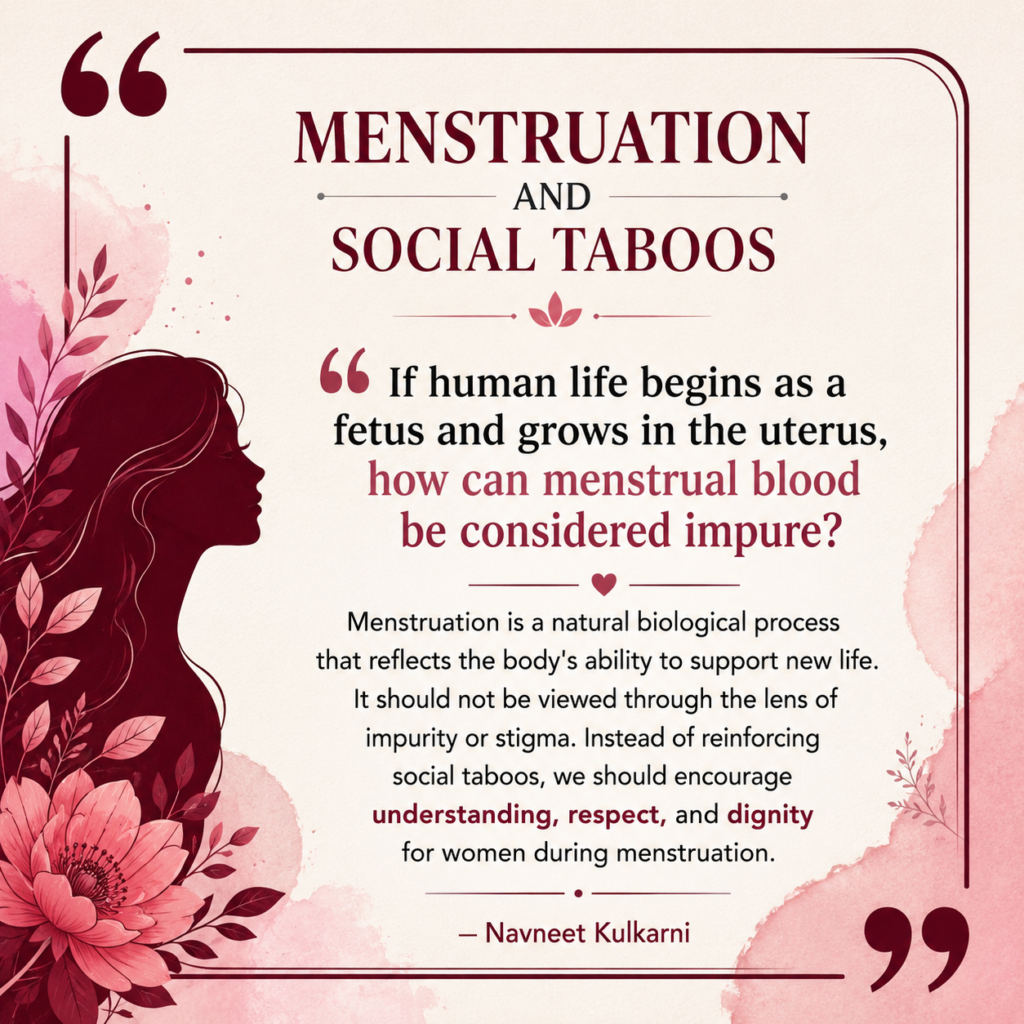
When life begins as a fetus and grows in the uterus, then how can menstrual blood be considered impure?
Women in earlier times were often not allowed to enter the kitchen to cook, visit temples, or perform pooja during their menstrual cycle. They were made to stay in a separate room, maintaining social distance from the rest of the family. Even today, many families continue to follow these practices. As far as I know, menstruation is a natural biological phenomenon. It is a scientific process, whereas many of the rituals associated with it are based on tradition and belief. If every human life begins and grows in the uterus, then how can menstruation itself be considered impure?
The Reason Behind These Rituals
Many saints, scholars, and spiritual leaders have offered different explanations for menstruation-related rituals, often linking them to hygiene and women’s physical health.
In earlier times, women performed physically demanding household work, such as grinding grains using heavy grinding stones, fetching water from wells, carrying pots of water on their heads, and many other strenuous tasks. During menstruation, they were therefore given three days of rest. This explanation has been discussed by many people and spiritual leaders over the years.
However, there is another perspective that I would like to share. This is my personal opinion, and my intention is neither to criticize any ritual nor to hurt anyone’s religious sentiments. I simply believe that people should understand the history behind traditions instead of following them blindly.
In my view, menstruation-related rituals may also have evolved as a way of protecting women during periods when they were more vulnerable. History records that, in many places and during different periods, women faced exploitation, including sexual violence and forced prostitution. It is possible that certain social and religious restrictions were introduced to provide women with privacy, safety, and protection during menstruation. This is my personal interpretation, and I acknowledge that historians and scholars may hold different views.
I also believe that practical reasons may have influenced some customs. In earlier times, many temples were located on hilltops with long flights of steps, making it physically difficult for menstruating women to visit them. Today, however, most temples are easily accessible, so this reason may no longer apply.
Some people also believe that chanting Vedic mantras during menstruation may affect the uterus or increase bleeding. However, there is no strong scientific evidence to support this belief. If a woman is comfortable, she can sit quietly, meditate, or participate in prayers according to her personal beliefs and family traditions. Similarly, while performing pooja at home, she can be a part of the rituals without taking on physically exhausting tasks if she prefers.
Are Religion and Rituals Greater Than Humanity?
Whenever there is a religious ceremony, wedding, festival, or other important occasion, many women voluntarily or under family and social pressure take medication to postpone their menstrual cycle. Even young girls often become victims of these expectations, without fully understanding the possible side effects.
I request doctors and healthcare professionals to take greater initiative in spreading awareness about the risks and side effects of menstrual delay medications, including their effects on hormones and overall health. Menstruation should be treated as a gift of nature rather than with social distancing or as something impure. Women have the right to treat their bodies the way they want to. If a woman feels like resting during her periods, she has the right to rest for three days. If she feels active, she can move her body and carry on with her activities the way she wants to.
Let’s give women the right to make decisions about their own bodies. Restricting their freedom because of menstruation is not right.
Disclaimer: Every family has its own customs, traditions, and beliefs. Whether to follow them is a personal choice.These are my personal opinions and reflections. They may not match everyone’s views, but perhaps they may encourage some readers to think differently. We should remember that the reasons behind traditions and social norms often change from one generation to another, and understanding their underlying purpose is just as important as preserving them.
No comment